Imaginar Histórias da Arte Queer em Portugal: o Caso de Mário Cesariny
DOI:
https://doi.org/10.34619/2hgg-grkkAbstract
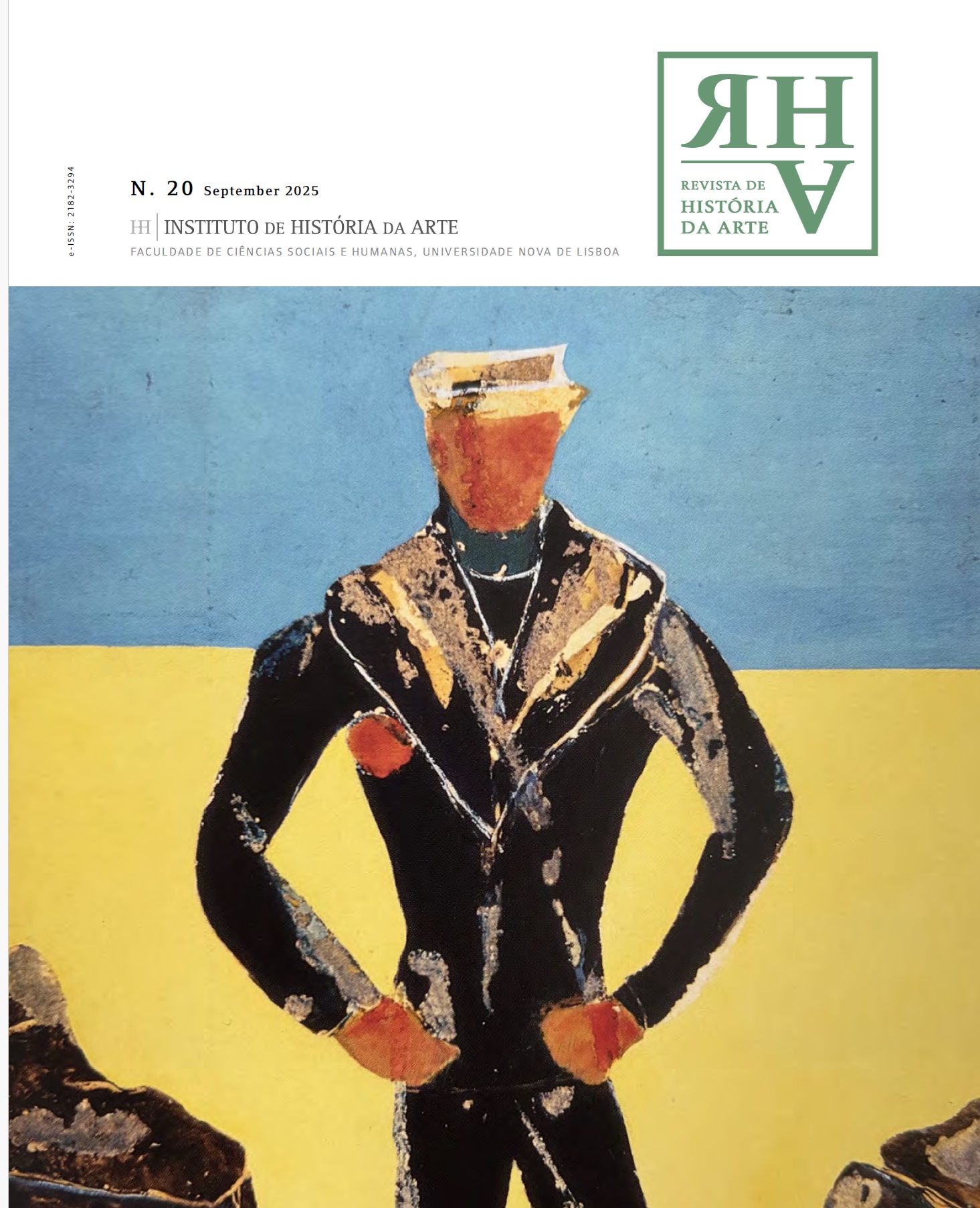
The desexualization in the Portuguese History of Art has overlooked the impact of sexual identities on artistic production and the trajectories of artists with dissident sexualities. This silence becomes particularly concerning in cases of openly homosexual artists such as Mário Cesariny, where the homoerotic content of his Marinheiros (Sailors) series has been rendered invisible. Analyzing these works within the scope of the artist’s private life and the context of cultural expressions that shaped the homoerotic imaginary of the sailor in the 19th and 20th centuries allows them to be associated with values of eroticism, virility, freedom, and class. Cesariny’s sailors become pictorial symbols of resistance in homophobic environ[1]ments, embodying gay desire coded within a heteronormative masculinity. By suggesting how the absence of queer perspectives perpetuates the marginalization of these artworks, we propose a methodological revision in Portuguese History of Art that integrates a more plural approach, enriching the disciplinary field
Downloads